
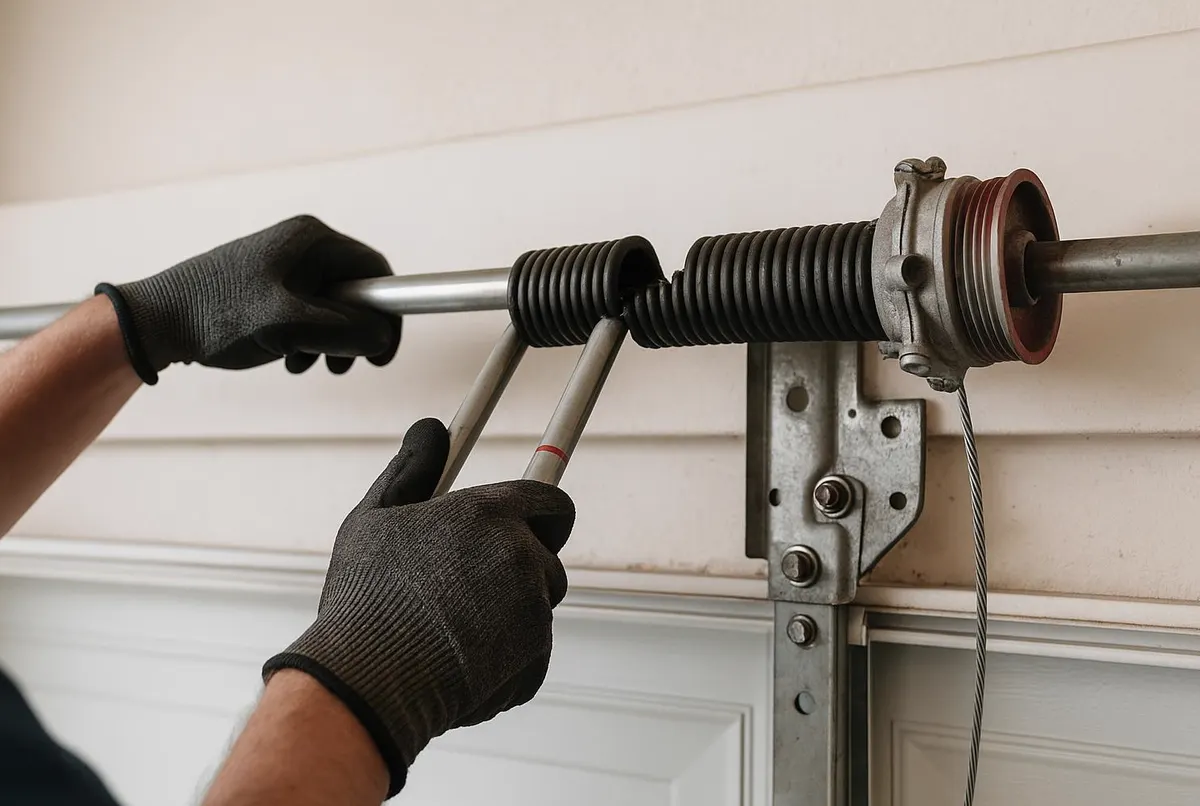
The Moment You Know Something's Wrong
It usually happens the same way. You hit the opener button on your way out and the door barely twitches, or it lurches up a few inches and stalls. Maybe you heard a loud bang from the garage the day before and figured it was thunder. It wasn't. That's the sound of a torsion spring letting go. Once a spring snaps or loses tension, the opener motor is trying to lift the full weight of the door by itself, which it was never built to do, and that's when people start Googling garage door repair near Layton FL at nine in the morning before work.
Before you call anyone, it helps to know roughly what this repair costs, what makes the price move, and what a legitimate quote should actually include.
What Spring Replacement Typically Costs
These are national ranges, not a quote for your door, and your actual price will depend on the factors below. As a general guide:
- Single torsion spring replacement: roughly $150–$350 for parts and labor
- Pair of torsion springs (recommended when one fails, since the other is usually close behind): roughly $250–$600
- Extension spring replacement (both sides): roughly $100–$300
- Heavy-duty or high-cycle springs: add roughly $50–$150 on top of standard pricing
- Same-day or after-hours emergency service: add roughly $50–$100
Springs are rated by cycles, meaning how many times they can open and close before wearing out, and by the weight and dimensions of your specific door. A technician needs to measure your door, not guess, before giving you a real number.
What Pushes the Price Up or Down
Door Weight and Size
A single-car door with a lightweight panel needs less spring tension than a double-wide door, and double doors generally cost more to spring because they need stronger springs or two sets working together.
One Spring vs. Two
If you have torsion springs and one breaks, the other has likely absorbed the same number of open-close cycles and is close to the end of its life too. Replacing both at once costs more upfront but avoids paying a second labor charge a few months later when the other one goes.
Spring Type and Coating
Standard galvanized springs cost less than coated or stainless options. In a coastal, salt-air environment, the extra few dollars for a corrosion-resistant coating is usually worth it, since plain steel springs here tend to rust and weaken faster than the same part would inland.
Wind-Load Rated Doors
Homes built or upgraded to meet wind-load requirements often have heavier, reinforced doors to withstand storm-force wind pressure. Heavier doors need higher-tension springs rated for that extra weight, which costs more than springs for a standard residential door.
Cables and Rollers
Springs and cables work as a system. If a spring breaks while the door is moving, it's common for a cable to fray or jump off its drum at the same time. A tech who only swaps the spring and ignores a fraying cable is setting you up for a second repair call. Ask whether cable and roller condition was part of the inspection.
Access and Condition of the Door
Older openers, rusted track, humidity-swollen panels, or a door that's been off track and forced back into place can all add time to the job. A door that's been sitting in high humidity for years sometimes has hardware that's seized or corroded, which takes longer to remove safely.
Emergency and Same-Day Calls
If the spring breaks and the car is trapped inside before a storm rolls in, same-day service is worth paying extra for, but know that it typically does carry a premium over scheduling a next available slot.
What a Proper Quote Should Include
Before any work starts, a written quote or estimate should spell out:
- The specific spring type, size, and cycle rating being installed
- Whether one spring or both are being replaced, and why
- A labor cost separate from parts cost
- Whether cables, rollers, and hinges were inspected and what condition they're in
- A post-repair balance test, confirming the door opens and closes evenly by hand with the opener disconnected
- The warranty length on both the spring and the labor
- Any trip or diagnostic fee, and whether it's waived if you move forward with the repair
If a company won't put these details in writing before starting work, that's a red flag regardless of the dollar amount they quote you over the phone.
Why Timing Matters Here
A garage door that won't seal properly, whether from a broken spring or a door that's off its track, is a liability once afternoon downpours and hurricane-season storms start rolling through. Wind pressure on an unbalanced or improperly tensioned door can do more damage than the storm itself, and salt air speeds up corrosion on any spring or hardware left exposed. Getting a broken spring fixed promptly, rather than propping the door open with a 2x4 and hoping for the best, is the cheaper option in almost every case.
When to Call Layton Garage Door Pro
If your spring has snapped, your door is unusually heavy to lift by hand, or you're hearing a loud pop followed by a door that won't budge, that's a job for Garage Door Spring Repair, not a DIY fix. Torsion springs are under enough tension to cause serious injury, and this isn't a repair to attempt with a YouTube video and a pair of pliers. If your springs are still working but starting to look rusted, squeaky, or your door feels harder to lift than it used to, our Garage Door Maintenance & Tune-Up service can catch a weakening spring before it fails outright, which is almost always less disruptive and less costly than an emergency call.
We serve Layton, Islamorada, Marathon, Key Colony Beach, Duck Key, Tavernier, Long Key, and Big Pine Key, with straightforward pricing and no hidden fees. If your garage door won't open this morning, call Layton Garage Door Pro and we'll send a technician out to diagnose it and give you a clear, written quote before any work begins.