
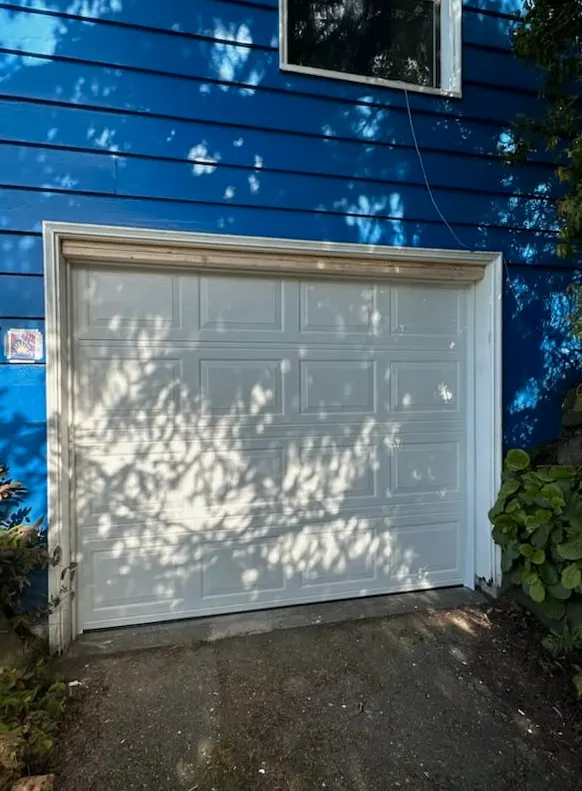
What a technician actually sees on these calls
A tech pulls up for a spring repair or a tune-up, and before they even touch the door, one spouse is already saying "see, this is why we need a new one" while the other is saying "it works fine, don't exaggerate." It happens constantly. Someone wants a sleek new carriage-house style door because it'll look better when they sell. Someone else thinks that's a waste of money on a door that still opens and closes. Both of them are a little bit right, which is annoying if you're trying to win an argument, but it's the honest answer.
The curb appeal part isn't hype
Garage doors cover a large, visible chunk of the front of most homes in this area — often more square footage than the front door and windows combined. When that door is faded, chalky from sun exposure, or has a panel that's slightly bowed or dented, it drags down the whole look of the house even if everything else is in good shape. Buyers and appraisers both register this, even subconsciously. A clean, well-proportioned door in a color that actually matches the trim can make a house look newer and better maintained than it is. A tired door can make a freshly painted house look neglected.
This matters more here than in a lot of places because salt air and humidity age exterior surfaces faster. A door that would look fine for 15 years inland might show rust streaks, pitting on hardware, or faded paint in half that time near the water. So the "it still works fine" argument can be true mechanically while the door is still quietly working against your home's resale appeal.
What it's actually worth at resale
National renovation-value studies (the kind that get cited in real estate circles) consistently rank garage door replacement among the highest-returning exterior projects, often recovering a large majority of its cost back in resale value — sometimes even more than the project cost, depending on the market and the door chosen. Those are national ranges, not a promise for any specific house, but the pattern is consistent year after year: garage doors punch above their weight compared to a lot of other remodeling projects.
Why does a garage door perform so well compared to, say, a kitchen remodel? A few reasons. It's cheaper than most major renovations, so the return-on-cost ratio looks good even if the dollar amount isn't huge. It's also the first thing people see in listing photos and drive-by showings, so it affects a buyer's gut reaction before they've even stepped inside. First impressions carry weight that's hard to quantify but easy to notice.
Where the realistic expectations come in
None of that means any new door automatically pays for itself. A few things determine whether you actually get that value back:
- Style match matters more than price. An expensive door that clashes with the house's architecture can hurt more than help. A modest door that fits the home's lines usually outperforms a flashy one that looks bolted on.
- Condition of the rest of the exterior. A beautiful new door next to peeling trim or a cracked driveway won't carry the whole house. Buyers notice the contrast, not just the door.
- Wind-rating and material choice affect long-term value here specifically. In this part of Florida, doors need to handle storm wind loads, and buyers — or their inspectors — often ask about it. A door with the right wind rating and corrosion-resistant hardware holds its value better than a cheaper import that looks fine on day one but shows rust streaks or hardware failure after a season or two of salt air and humidity.
- Not every house needs full replacement. If the door's structure is sound and it's just looking tired, a repaint, new weatherstripping, and updated hardware can close a lot of the visual gap for a fraction of the cost. Replacement earns its keep when the door is actually failing, badly outdated, or mismatched with the house, not just slightly dull.
So who's right, you or your spouse?
If the door is functioning well, free of rust or structural issues, and simply isn't the style either of you loves, a full replacement is a nice-to-have rather than a financial necessity — it'll likely help resale somewhat, but you're paying for aesthetics, which is a fair thing to want and a fair thing to question. If the door is sagging, rusting at the bottom panels, missing its wind rating, or visibly mismatched with a house you're planning to sell within the next couple of years, replacement moves from "nice to have" into "this is actually going to cost you buyer confidence if you skip it."
When to call Layton Garage Door Pro
If you're trying to figure out which side of that line your door is on, that's exactly the kind of call we get. We'll walk the door with you, point out what's cosmetic versus what's a real problem, and give you a straight read instead of a sales pitch. For houses where the door still has good bones, our Garage Door Maintenance & Tune-Up service can tighten hardware, fix minor track issues, and get it looking and operating like new for a fraction of replacement cost. For doors that are past that point — rusted through, undersized for current wind-load expectations, or just visibly out of step with the house — our Garage Door Installation & Replacement service covers everything from picking a style that fits your home to making sure the new door meets the wind-rating standards that matter in the Keys.
If you're trying to settle this argument with real information instead of guesses, call Layton Garage Door Pro. We serve Layton, Islamorada, Marathon, Key Colony Beach, Duck Key, Tavernier, Long Key, and Big Pine Key, and we'll give you a straightforward answer about what your door needs and what it's actually worth fixing versus replacing.