
The Moment You Notice It
It's a cooler November morning, maybe the first real cold front has pushed through and dropped the temperature into the 50s or low 60s overnight. You hit the opener button on your way out and the door hesitates. It jerks instead of gliding, maybe groans at the bottom corners, or stops halfway and reverses for no obvious reason. On the worst mornings it barely budges at all, like something is holding it to the slab. In the Keys it's never literally frozen, but the symptom feels the same — sluggish, heavy, reluctant — and it tends to show up right after a stretch of cool, damp weather following weeks of heat and humidity.
That temperature and moisture swing is exactly why this happens here. A door that worked fine all summer can suddenly feel wrong the first cool week of the season, and the reasons are worth checking in the order a technician actually would.
What Gets Checked First, and Why
1. The Photo-Eye Sensors
Before touching any hardware, a tech checks the safety sensors near the bottom of the tracks. Overnight temperature drops after a humid day cause condensation to form on almost any glass or plastic surface outdoors, including sensor lenses. A fogged or dew-covered sensor reads as an obstruction, so the opener refuses to close the door smoothly or reverses mid-cycle. The fix is simple: wipe both lenses dry, confirm they're aimed directly at each other, and check that nothing nudged them out of alignment. No parts needed, just a few minutes.
2. Tracks and Rollers
Next comes a visual pass along both tracks. Salt air works on exposed steel year-round, but surface rust becomes easier to spot and feel after a cooler, damp stretch because moisture sits longer on metal before it evaporates. Rust buildup on the track lip or pitting on the rollers creates friction that makes the door bind, especially at the bottom section where road salt residue and coastal humidity collect. The fix is cleaning the rust off with a wire brush, checking the rollers for flat spots or corrosion damage, and replacing any rollers that have pitted enough to catch rather than roll.
3. Torsion Springs
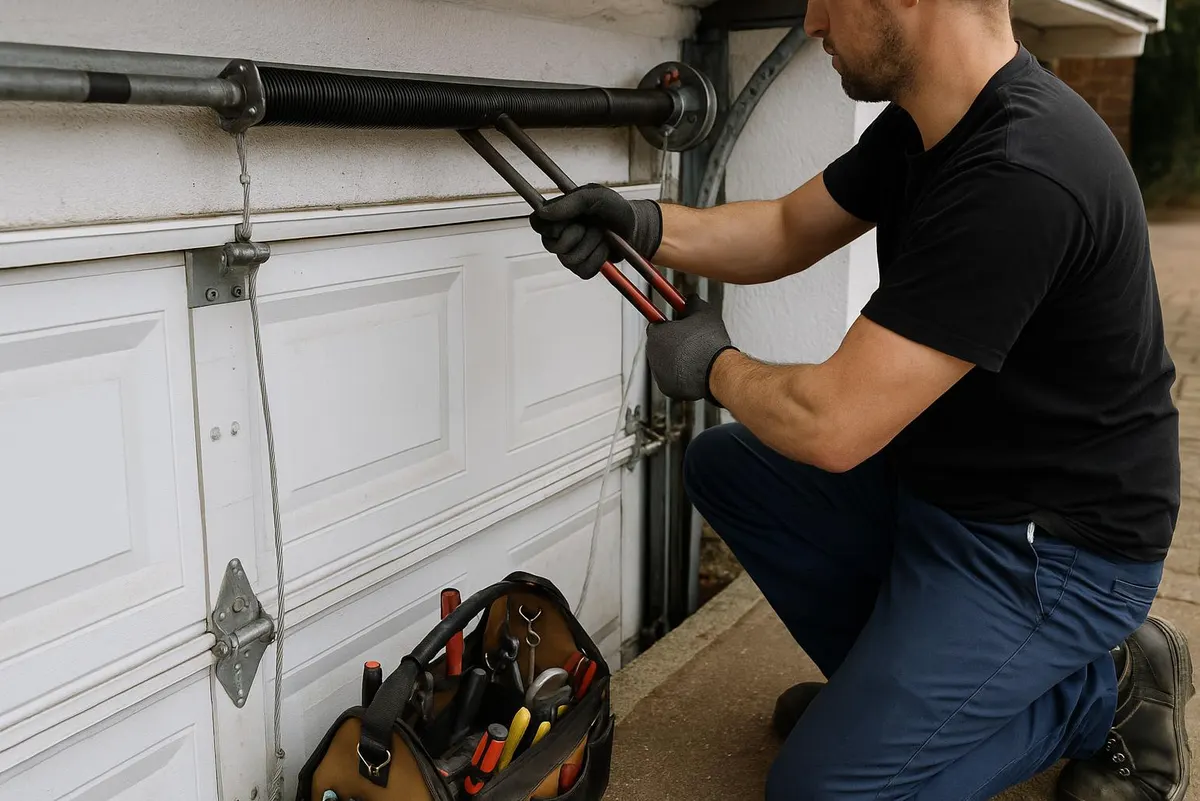
Springs are checked next because metal contracts slightly as temperatures drop, and a spring that's already under-tensioned from age or wear can lose just enough lift to make the door feel heavier than normal. This isn't usually a sudden failure — it's a spring that was already close to the end of its life getting pushed over the edge by a cold snap. A technician checks for visible gaps between coils, uneven tension side to side, or a door that only struggles going up (not down), which points to the springs rather than the opener. Depending on wear, this means retensioning or full spring replacement, which is not a DIY job given the force stored in the coils.
4. Weatherstripping and the Slab
The bottom seal gets inspected next. Vinyl or rubber weatherstripping swells with humidity during our long wet stretches, then can stiffen or stick to a damp concrete slab overnight, especially if the garage floor holds moisture from afternoon downpours. That stickiness is often what makes a door feel like it's resisting the first few inches of travel. The fix is replacing weatherstripping that's cracked, swollen, or has lost its flexibility, and making sure the slab drains instead of pooling water against the door.
5. Hinges and Old Lubricant
Last, a tech checks the hinges and rollers for lubricant that's gone gummy. Grease or oil that's been sitting through a hot, humid summer can mix with dust and salt residue into a thick paste that resists movement in cooler air, which is different from just being dry. The fix is cleaning old lubricant off completely and reapplying a silicone-based garage door lubricant rated for humid, coastal conditions rather than a generic household oil that breaks down fast in this climate.
When to Call Layton Garage Door Pro
If you've wiped the sensors, don't see obvious rust or swelling, and the door still jerks, reverses, or feels heavy, it's time to call. That's usually a spring on its way out or a track that's bent slightly out of alignment, both of which need the right tools and tensioning equipment to fix safely. Our Garage Door Spring Repair and Garage Door Cable & Roller Repair services cover exactly this: a full check of spring tension, track alignment, rollers, and hardware, with straightforward pricing and no surprise add-ons.
If your door in Layton, Islamorada, Marathon, or anywhere along the Keys is sticking, groaning, or hesitating this season, call Layton Garage Door Pro and we'll have a technician out to get it moving smoothly again.